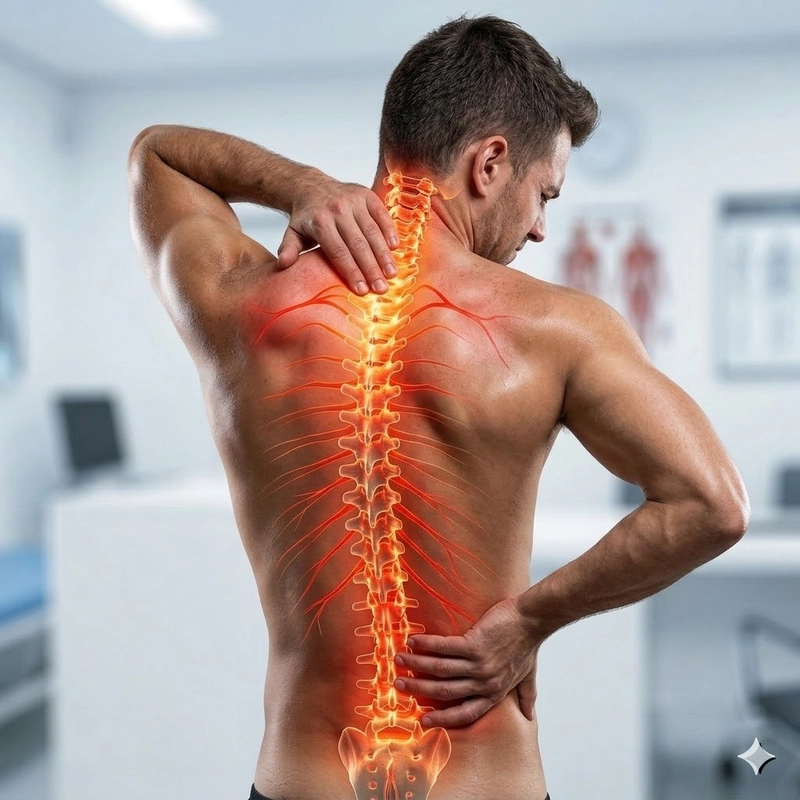
Back Pain
Back pain is physical discomfort occurring anywhere in the spine or back — upper, mid, or lower — ranging from mild to very severe.

Symptoms
Back pain is one of the most common medical problems worldwide. Nearly 84–91% of adults are affected and it is a leading cause of disability — with lower back pain having a lifetime prevalence as high as 82–85%. The most important cause is pressure on the nerves of the spine (nerve compression due to slip disc). You may experience:
- Difficulty or increasing pain with lifting and bending.
- Worsening pain when resting, sitting, walking or standing.
- Back pain that comes and goes.
- Stiffness or increasing pain in the morning which reduces with movement.
- Pain radiating from the buttocks or legs (one or both sides).
- Tingling, numbness, burning, imbalance or weakness in the legs or feet.
- Trouble urinating or passing motion.
Causes
Some of the contributing factors include:
- Occupational sprain or strain due to bending, twisting, lifting heavy weights, or prolonged sitting or driving.
- Lifestyle issues like poor posture, sedentary lifestyle, weight gain, smoking, or lack of exercise.
- Physical causes like disc degeneration due to ageing, arthritis, tumour, trauma or infection.
- Age factors like osteoporosis (weak bones) or Degenerative Disc Disease.
- Medical conditions like obesity, fibromyalgia, osteoporosis, sciatica, pregnancy, or scoliosis.
- Inflammatory conditions like Ankylosing Spondylitis or sacroiliitis.
Diagnosis
History and physical examinations are enough to determine the cause in most cases. The doctor will clinically assess you by conducting neurological tests involving sensation, reflexes, range of motion, tenderness, muscle power, and any deformity. Correlation of clinical assessment and diagnostic imaging may be required. Tests include:
- X-ray
- MRI
- CT scan
- EMG/NCV
- DEXA scan
- Blood tests
Treatment
At Spine Science & Beyond, Non-Surgical Spinal Decompression has successfully treated thousands of patients suffering from various spinal issues without surgery, medications, injections or exercises. Benefits include:
- Works on the root cause.
- Treatment with zero side effects.
- Reduces intradiscal pressure and helps the disc return to its normal state through a natural process, freeing the pressed nerve.
- Improves blood circulation and promotes natural healing.
- Reduces pain and relieves nerve compression.
- Improves disc quality and height.