Back Stiffness

Back stiffness is a condition where there is a hard or rigid feeling throughout the spine that makes movement difficult.
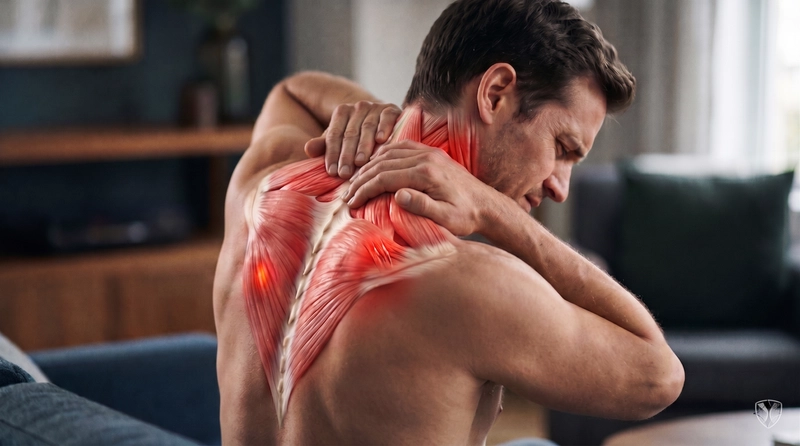
Back Stiffness

Symptoms

Back stiffness affects people of all ages — from teenagers to older adults — making it one of the most universally experienced spinal complaints. It can cause a heavy, tight sensation in the back, reduce range of motion, and make simple tasks like bending or turning painful.

All ages

teenagers through older adults affected

3 zones

neck, mid-back & lower back commonly affected

Most cases

caused by disc pressure or muscle protective response

Stiffness commonly affects these spinal regions:

Neck (cervical)Difficulty rotating or tilting the head; pain on waking

Mid-back (thoracic)Tightness between shoulder blades; restricted trunk rotation

Lower back (lumbar)Difficulty bending forward; heaviness after sitting or lying

Depending on cause & location, you may also experience:

Morning stiffness that is worst on waking and gradually eases with movement

Pain that worsens with prolonged rest, sitting, standing, or walking

Heavy or restricted movement in the back, neck, legs, feet, hands or fingers

Pain that comes and goes, often triggered by certain postures or movements

Muscle spasms or tightness alongside the spine after sudden movement

Difficulty bending, twisting, or straightening up fully from a bent position

Causes

Back stiffness can arise from mechanical, lifestyle, and inflammatory factors — often acting together over time. A key mechanism is muscle guarding: when a disc or nerve is irritated, surrounding muscles tighten as a protective reflex, creating the rigid, heavy sensation characteristic of back stiffness.

Disc compression & nerve irritationPrimary driver

When a slipped or bulging disc presses on a spinal nerve, the surrounding muscles contract protectively. This muscular guarding is the most common cause of the rigid, heavy feeling in the back.

Slip discDisc bulgeNerve compressionMuscle guarding

Occupational strain

Repetitive bending, twisting, heavy lifting, prolonged sitting, and driving all place sustained load on spinal structures, leading to chronic muscle tightness and restricted movement.

Heavy liftingProlonged sittingBending & twistingDriving

Lifestyle & posture

Poor posture, sedentary habits, weight gain, and smoking reduce spinal mobility over time. Incorrect exercise/gyming technique — such as heavy deadlifts with poor form — can acutely trigger stiffness and spasm.

Poor postureSedentary lifestyleWeight gainSmokingIncorrect exercise form

Age & degeneration

Degenerative disc disease progressively reduces disc height and flexibility, narrowing the space between vertebrae and making the spine less mobile and more prone to stiffness.

Degenerative disc diseaseLoss of disc heightReduced spinal flexibility

Inflammatory conditions

Inflammatory spinal conditions cause characteristic stiffness — often worst in the morning — driven by joint and ligament inflammation rather than mechanical load.

Ankylosing spondylitisSacroiliitisConnective tissue disorder

Diagnosis

In most cases, a thorough history and physical examination are sufficient. The doctor will assess your range of motion, muscle tone, tenderness, sensation, reflexes, and any deformity. Diagnostic tests confirm or clarify the underlying cause.

Myometry

EMG

MRI

Blood tests

Myometry objectively measures muscle stiffness and resistance. EMG identifies abnormal electrical activity in muscles and nerves. MRI visualises disc, nerve, and soft tissue involvement. Blood tests help rule out inflammatory or systemic conditions driving the stiffness.

Treatment

Non-surgical spinal decompression

At Spine Science & Beyond, we have successfully treated thousands of patients with back stiffness — without surgery, medications, injections, or exercise programs.

No longer relying on:

Physiotherapy

Surgery

Steroid injections

Painkillers

Exercise alone

Why spinal decompression works:

Targets the root cause — relieving disc pressure that triggers the muscle guarding response

Completely non-invasive with zero side effects

Reduces intradiscal pressure, allowing the bulged disc to return to its natural position and freeing the compressed nerve

Improves blood circulation and promotes natural healing of discs and surrounding soft tissue

Progressively reduces pain, stiffness, and nerve compression

Improves disc quality, restores disc height, and improves long-term spinal mobility

Book Your Consultation

95% successful rate.

Ready To Live Pain-Free?

Take the first step towards healthier life today. No Surgery. Just Science.