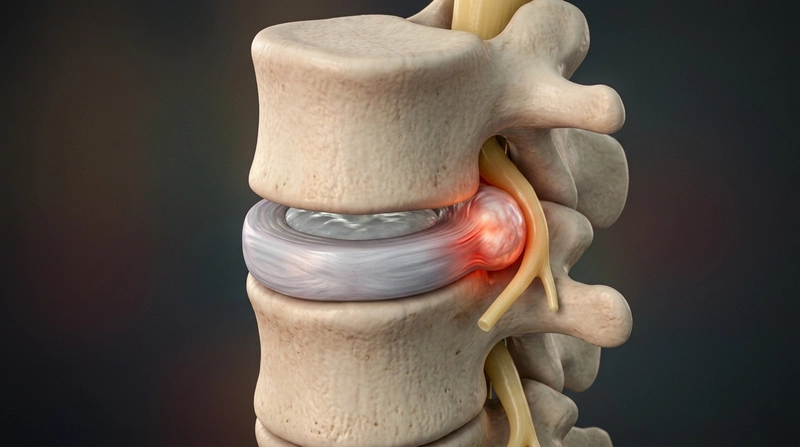
Disc bulge

A disc bulge occurs when the disc loses its original shape and comes out of alignment, sometimes pressing on a nerve.

Disc bulge

Symptoms

Disc Bulge is one of the most common medical problems worldwide. Nearly 30% of young adults and 70% of older adults are affected — it progresses with time and affects mobility if left untreated.

Disc Bulge can occur anywhere along the spine but mostly affects the lower back, neck, or upper back. Depending on the type, cause and location, you may experience:

  • Difficulty or increasing pain with lifting and bending.
  • Worsening pain when resting, sitting, walking or standing.
  • Back pain that comes and goes.
  • Stiffness or increasing pain when getting up in the morning which reduces with movement.
  • Pain radiating from the buttocks or down one or both legs.
  • Pain from the neck or upper back to the hands or fingers.
  • Tingling, numbness, burning, imbalance or weakness in the legs, feet, hands or fingers.
  • Trouble urinating or passing motion.
  • Dizziness or giddiness when changing position.
  • Headaches which worsen on movement.

Causes

Disc Bulge can occur due to many different factors. The most important reason is increased pressure on the nerve of your spine (compressed nerve due to slip disc). Some causes include:

  • Occupational sprain or strain due to bending, twisting, lifting heavy weights, or prolonged sitting or driving.
  • Lifestyle issues like poor posture, sedentary lifestyle, weight gain, or smoking.
  • Physical causes like disc degeneration due to ageing, arthritis, tumour, trauma or infection.
  • Age factors like osteoporosis or Degenerative Disc Disease.
  • Medical conditions like obesity, fibromyalgia, sciatica, pregnancy, or scoliosis.
  • Inflammatory conditions like Ankylosing Spondylitis or sacroiliitis.

Diagnosis

History and physical examinations are enough to determine the cause in most cases. The doctor will clinically assess you by conducting neurological tests involving sensation, reflexes, range of motion, tenderness, muscle power, and any deformity. Correlation of clinical assessment and diagnostic imaging may be required. Tests include:

  • X-ray
  • MRI
  • CT scan
  • EMG/NCV
  • DEXA scan
  • Blood tests

Treatment

At Spine Science & Beyond, Non-Surgical Spinal Decompression has successfully treated thousands of patients suffering from various spinal issues without surgery, medications, injections or exercises. Benefits include:

  • Works on the root cause.
  • Treatment with zero side effects.
  • Reduces intradiscal pressure and helps the disc return to its normal state through a natural process, freeing the pressed nerve.
  • Improves blood circulation and promotes natural healing.
  • Reduces pain and relieves nerve compression.
  • Improves disc quality and height.

Book Your Consultation

95% successful rate.

Ready To Live Pain-Free?

Take the first step towards healthier life today. No Surgery. Just Science.