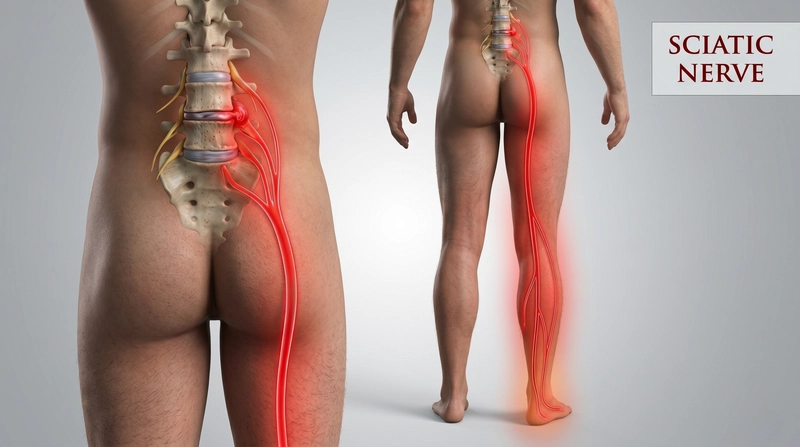
Sciatica

Sciatica refers to compression of the sciatic nerve, causing pain that radiates from the lower back or buttocks down one or both legs.

Sciatica

Symptoms

Sciatica is one of the most common symptoms experienced due to a slipped disc in the lower back. Pain can occur anywhere along the sciatic nerve — from the lower back through the buttocks, back of the thigh, calf, and into the foot. It can range from a dull ache to a sharp, electric-shock sensation.

40%

of people will experience sciatica at some point

Longest

nerve in the human body

90%

of cases caused by a slipped disc

The sciatic nerve pathway — where pain can appear:

Lower backL4–S3 nerve roots

ButtocksGluteal region

Back of thighHamstring area

CalfLower leg

Foot & toesTerminal branches

How the pain feels — three common types:

Electric / shootingSharp, sudden shock down the leg

BurningConstant heat sensation along the nerve

Dull achingDeep, heavy ache in buttock or thigh

You may also experience:

Mild to severe pain radiating from the lower back through the buttocks and down the leg

Increasing pain with lifting and bending, especially from a seated position

Pain that worsens with prolonged sitting, standing, walking, or lying down

Morning stiffness that may increase or ease with movement throughout the day

Tingling, numbness, or burning in the leg, calf, foot, or toes

Muscle weakness or imbalance in the affected leg

Pain that comes and goes, often triggered by specific postures or movements

Reduced bladder or bowel control in severe cases — seek urgent attention

Sciatica affecting both legs simultaneously, or combined with loss of bladder or bowel control, is a medical emergency. Seek immediate care.

Causes

Sciatica is a symptom, not a standalone diagnosis — it always has an underlying cause compressing the sciatic nerve. Identifying and treating that root cause is what determines long-term recovery.

Slipped / herniated discPrimary cause — 90% of cases

A herniated lumbar disc is by far the most common cause. When the disc's inner gel pushes out and contacts the sciatic nerve roots (L4–S3), it triggers the characteristic radiating pain down the leg.

Disc herniationL4–L5L5–S1Nerve root compression

Occupational strain

Repetitive bending, twisting, heavy lifting, prolonged sitting, and driving all accelerate disc degeneration in the lumbar spine — making herniation and sciatic compression more likely over time.

Heavy liftingProlonged sittingBending & twistingDriving

Lifestyle & posture

Poor posture, sedentary habits, weight gain, and smoking impair disc health and increase mechanical load on the lumbar spine. Contact sports and incorrect gym technique can acutely trigger disc herniation.

Poor postureWeight gainSmokingContact sportsIncorrect exercise form

Age & degeneration

Disc degeneration, osteoporosis, and degenerative disc disease all narrow the spaces through which the sciatic nerve travels — increasing susceptibility to compression as the spine ages.

Disc degenerationOsteoporosisDegenerative disc diseaseArthritis

Trauma & other physical causes

Road traffic accidents, falls, direct spinal trauma, tumours, and spinal infections can all acutely compress the sciatic nerve — either by disc displacement or direct nerve involvement.

Road accidentsFallsInfectionTumour

Medical conditions

Conditions that increase spinal load or alter lumbar anatomy — obesity, scoliosis, pregnancy, and fibromyalgia — are significant contributing factors to sciatic nerve compression.

ObesityScoliosisPregnancyFibromyalgia

Inflammatory conditions

Inflammatory spinal conditions can narrow the nerve canals of the lumbar spine, compressing the sciatic nerve roots through structural and inflammatory changes.

Ankylosing spondylitisSacroiliitis

Diagnosis

A thorough history and physical examination are usually sufficient to diagnose sciatica and identify its cause. The doctor will perform a neurological assessment — testing sensation, reflexes, muscle power, range of motion, and the SLR (straight leg raise) test — and order imaging to confirm the source of compression.

X-ray

MRI

CT scan

EMG / NCV

DEXA scan

Blood tests

MRI is the gold standard — it directly visualises the disc herniation and its relationship to the sciatic nerve roots. A positive straight leg raise (SLR) test — pain reproduced between 30° and 70° of leg elevation — is a key clinical sign of sciatic nerve compression. EMG/NCV identifies which nerve root is affected and the degree of nerve damage.

Treatment

Non-surgical spinal decompression

At Spine Science & Beyond, we have successfully treated thousands of patients with sciatica — without surgery, medications, injections, or exercise programs.

No longer relying on:

Physiotherapy

Surgery

Steroid injections

Painkillers

Exercise alone

Why spinal decompression works:

Targets the root cause — the disc herniation compressing the sciatic nerve — rather than masking symptoms

Completely non-invasive with zero side effects

Reduces intradiscal pressure, allowing the slipped disc to return toward its natural position and freeing the sciatic nerve

Improves blood and nutrient circulation to the disc and surrounding nerve tissue, promoting natural healing

Progressively reduces radiating leg pain and relieves nerve compression

Improves disc quality, restores disc height, and reduces the risk of recurrence

Book Your Consultation

95% successful rate.

Ready To Live Pain-Free?

Take the first step towards healthier life today. No Surgery. Just Science.