Slipped Disc

A slipped disc (herniated disc) is a condition in which the soft inner gel slips out of place and puts pressure on a nerve — causing pain, tingling, weakness, and in severe cases, loss of function..
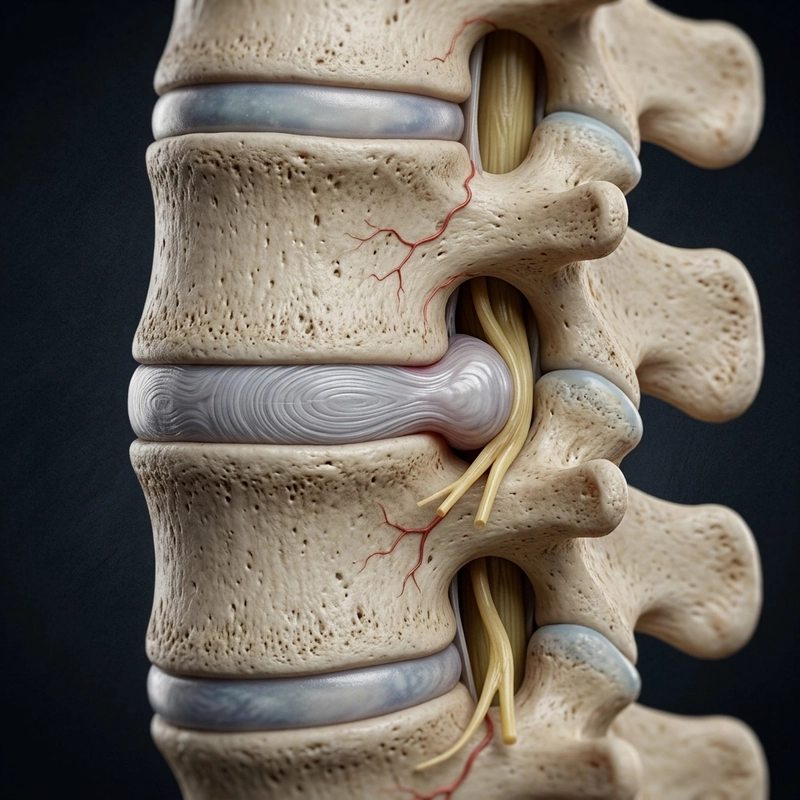
Slipped Disc

Symptoms

Slipped disc is one of the most common spinal conditions globally — affecting almost the entire population at least once in their lifetime. It is a leading cause of disability, particularly in younger adults, where lifestyle factors play a central role.

~80%

of people experience a slipped disc at some point

#1

lifestyle-related cause of spinal disability in younger adults

4 stages

from disc bulge to full extrusion

Five stages of disc displacement:

Stage 1Disc bulgeDisc pressed outward but intact

Stage 2ProtrusionGel pushes into outer ring

Stage 3HerniationGel breaks through outer ring

Stage 4ExtrusionGel breaks through outer ring and moves upward/downward

Stage 5SequestrationFragment separates completely

Depending on type, cause & location, you may experience:

Increasing pain with lifting and bending, worsening progressively with activity

Morning stiffness and pain that may increase or ease with movement

Pain radiating from the buttocks or down one or both legs (sciatica)

Pain spreading from the neck or upper back into the hands or fingers

Tingling, numbness, burning, imbalance, or weakness in legs, feet, hands or fingers

Back or neck pain that comes and goes, varying with posture and position

Reduced bladder or bowel control in severe cases — seek urgent care

Dizziness or headaches worsening on movement or position change

Loss of bladder or bowel control alongside back pain is a red flag. Seek medical attention immediately.

Causes

A slipped disc rarely has a single cause — it is typically the result of several factors acting together over time, weakening the disc until a trigger event (a lift, a twist, or even a cough) causes it to herniate.

Occupational strainMost common

Repetitive bending, twisting, heavy lifting, prolonged sitting, and driving accumulate stress on spinal discs over time, gradually weakening the outer fibrous ring until it gives way.

Heavy liftingProlonged sittingBending & twistingDriving

Lifestyle & posture

Poor posture, a sedentary lifestyle, weight gain, and smoking all impair disc health. Contact sports and incorrect exercise/gyming technique — particularly heavy deadlifts — place sudden, extreme compressive loads on discs.

Poor postureWeight gainSmokingContact sportsIncorrect exercise form

Age & degeneration

As discs age, they lose water content and become less flexible — making them more susceptible to herniation under normal loads. Degenerative disc disease and osteoporosis further weaken the spinal structure.

Disc degenerationOsteoporosisDegenerative disc diseaseArthritis

Physical trauma

A road traffic accident, fall, or direct spinal impact can cause sudden acute herniation — even in a previously healthy disc — by exceeding the disc's structural tolerance in a single event.

Road accidentsFallsDirect traumaInfectionTumour

Underlying medical conditions

Systemic conditions increase vulnerability by adding mechanical load, altering spinal structure, or impairing tissue quality.

ObesityFibromyalgiaSciaticaScoliosisPregnancyOsteoporosis

Inflammatory conditions

Chronic spinal inflammation alters the mechanical environment of discs, making herniation more likely through structural and biochemical changes over time.

Ankylosing spondylitisSacroiliitis

Diagnosis

In most cases, a thorough history and physical examination are sufficient to diagnose a slipped disc. The doctor will conduct a neurological assessment covering sensation, reflexes, muscle power, range of motion, and any deformity — and correlate findings with imaging when needed.

X-ray

MRI

CT scan

EMG / NCV

DEXA scan

Blood tests

MRI is the gold standard — it directly visualises the disc, the degree of herniation, and nerve involvement. X-ray shows bone alignment and disc space narrowing. CT scan details bony canal narrowing. EMG/NCV evaluates nerve conduction. DEXA assesses bone density. Blood tests rule out infection or inflammatory conditions.


Treatment

Non-surgical spinal decompression

At Spine Science & Beyond, we have successfully treated thousands of patients with slipped disc — without surgery, medications, injections, or exercise programs.

No longer relying on:

Physiotherapy

Surgery

Steroid injections

Painkillers

Exercise alone

Why spinal decompression works:

Targets the root cause — directly addressing the disc herniation rather than masking symptoms

Completely non-invasive with zero side effects

Reduces intradiscal pressure, drawing the herniated material back toward its natural position and freeing the compressed nerve

Improves blood and nutrient circulation to the disc, promoting natural healing and rehydration

Progressively reduces pain and relieves nerve compression

Improves disc quality, restores disc height, and reduces recurrence risk

Book Your Consultation

95% successful rate.

Ready To Live Pain-Free?

Take the first step towards healthier life today. No Surgery. Just Science.